


Associate Professor Dr. Supat Chaikool, a specialist in health-focused food product research and development and faculty member of the Department of Nutrition, Faculty of Public Health, Mahidol University, emphasized that every carton of Thai milk undergoes strict production and quality control processes before reaching consumers. He confirmed that Thai milk meets international standards and encouraged consumers to make informed choices by reading labels to select products with nutrients appropriate for their health and life stage.
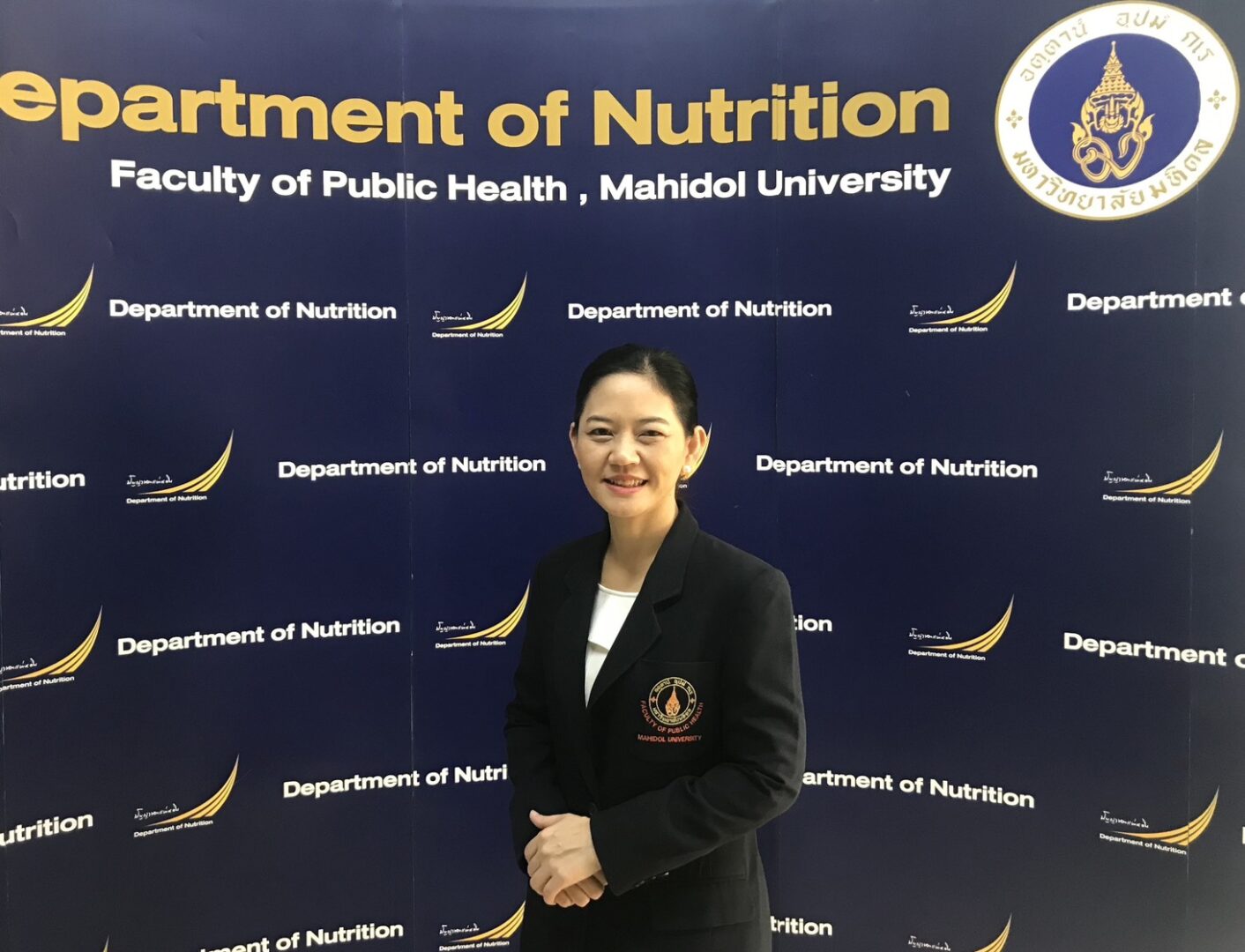 Dr. Supat Chaikool
Dr. Supat also highlighted innovations in nutrition derived from Thai milk, which have been developed into affordable medical food products under the Mahidol Collection brand. This initiative, led by the Institute of Technology and Innovation Management (INT), Mahidol University, plays a pivotal role in promoting and linking academic knowledge to high-standard commercial products, enabling private-sector collaboration in developing quality innovations confidently.
The Journey of a Carton of Thai Milk
Dr. Supat explained that milk production in Thailand is regulated by the Food and Drug Administration (FDA) and related agencies, including the Department of Livestock Development and the Dairy Farming Promotion Organization of Thailand (DPO). All milk factories must comply with GMP standards, covering farm hygiene, raw materials, transportation, packaging, and storage.
Dairy farms supplying milk to factories are certified for raw material quality, and every batch of raw milk is tested before processing. Leading factories also implement HACCP, ISO 17025, and some comply with Codex Alimentarius, the global standard for food safety.
Fortified milk products, such as those enriched with calcium, vitamin D, or high protein, are strictly monitored under FDA nutrient claim regulations. Any label claim such as “high protein” or “high calcium” must be validated by accredited laboratory analyses.
“These control processes ensure that every carton of milk produced in Thailand is safe and contains the nutritional value stated on the label. Every piece of information is backed by verified laboratory results,” said Dr. Supat Chaikool.

Choosing Between Fresh Milk and Reconstituted Milk Powder
It is a common misconception that fresh milk is inherently more nutritious than powdered milk. Dr. Supat clarified that both fresh cow’s milk and milk reconstituted from powder can offer similar nutrients if processed under standard procedures. Milk powder is essentially fresh milk converted into powder. While minor nutrient loss can occur, producers can fortify the final product to match the nutritional benefits of fresh milk.
The key is for consumers to understand what they are consuming and which nutrients they need, rather than assuming one product is superior to another. Nutrition labels serve as an essential tool to select milk suitable for individual health needs across different life stages.
Recommended Milk Consumption by Age Group
- Toddlers (1–3 years): 2 glasses/day to support bone and dental development
- Adolescents: 1–2 glasses/day for calcium and protein to support growth
- Working-age adults: 1 glass/day or choose low-fat options
- Older adults: 2 glasses/day, preferably high-calcium or lactose-free for easier digestion
From Thai Milk to Affordable Medical Nutrition – Mahidol Collection
A notable achievement demonstrating Thai milk’s potential is its development into medical food products. Dr. Supat’s research team, in collaboration with the Dairy Farming Promotion Organization of Thailand (DPO), developed lactose-free medical nutrition for diabetic patients using high-quality Thai cow milk combined with easily digestible brown rice protein.
This locally produced product offers a cost-effective alternative to imported medical nutrition, priced around THB 49 per serving, up to three times cheaper than imported equivalents. Registration as a medical food product is underway.
“Our goal is to create a complete nutritional formula supported by scientific evidence, accessible in price, while also benefiting Thai farmers,” said Dr. Supat Chaikool.
The formula balances macronutrients: high-quality cow milk protein for muscle repair, slow-digesting carbohydrates from Thai brown rice for sustained energy, and healthy fats from Omega 3, 6, and 9 for cardiovascular health. The Mahidol Collection mark guarantees that these products are developed by Mahidol experts, with INT facilitating the translation of academic knowledge into high-standard commercial innovations.
Alternative Protein from Egg Whites – Another Health Innovation
For those who cannot consume milk, Mahidol University has developed high-quality egg white protein beverages. Dr. Dolporn Saetae, from the Department of Industrial Engineering, Faculty of Engineering, explained that egg white protein contains all essential amino acids, making it ideal for health-conscious individuals or those needing rapid protein supplementation. Each bottle provides protein equivalent to 4–5 egg whites and is available in flavors such as cocoa, coffee latte, green tea latte, and Thai tea. The beverage is odorless, easy to drink, and caters to modern lifestyles.
INT – Innovation Gateway of Mahidol University
These innovations highlight the role of the Institute of Technology and Innovation Management (INT), Mahidol University, as the Innovation Gateway. INT leverages scientific knowledge to create real-world impact, enhancing health, well-being, and quality of life for people in Thailand and globally.