


Sansiri Positions Thailand as a “Global Safe Asset” A New Definition of Wealth Amid Global Economic Volatility
Thailand is emerging as a key destination for the world’s ultra-high-net-worth individuals (UHNWIs), as the definition of “wealth” undergoes a significant transformation. No longer measured solely by financial returns, wealth now encompasses quality of life, health, and the freedom to live across multiple countries. The concept of “Wealth + Wellness + Mobility” has therefore become central to investment decisions and residential choices among UHNWIs worldwide.
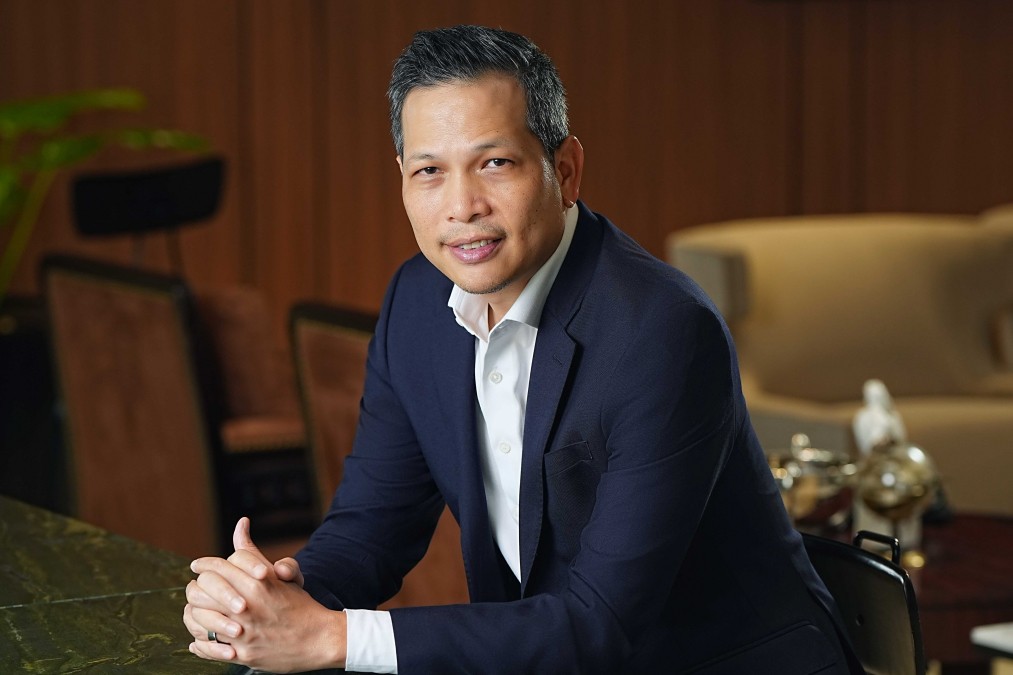
Poomipak Julmanichoti, Chief Strategy Officer of Sansiri Public Company Limited, one of Thailand’s leading real estate developers, stated that Thailand is evolving from a mere “destination” into a “Global Safe Asset” a place that fulfills the needs of living, investing, and long-term value preservation amid global economic and geopolitical uncertainties. A key factor underpinning Thailand’s attractiveness is its “Infrastructure of Life.”
This includes world-class healthcare systems, top-tier international schools, food security, and a high-quality lifestyle that is increasingly difficult to find elsewhere. Equally important is the Thai people themselves, who are consistently praised by international visitors for their friendliness, generosity, and the sense of safety they provide qualities that often stand in contrast to experiences in other countries.
“Thailand is no longer just a place for leisure; it is becoming an integral part of the Global Wealth Ecosystem, where investors can live, invest, and plan long-term within a single location,” he noted.
This perspective aligns with global media and analysts, who have begun to recognize Thailand as one of “The World’s Last Safe Havens.” Meanwhile, data from the Real Estate Information Center (REIC) of the Government Housing Bank indicates that although domestic purchasing power has slowed, foreign demand remains strong and consistent. The number of condominium transfers to foreign buyers has rebounded to near pre-pandemic levels, at approximately 13,000 units per year, following a decline in 2020–2021 and a rapid recovery since 2022.
Notably, the profile of foreign buyers has diversified beyond reliance on China, expanding to include buyers from Russia, Taiwan, the United Kingdom, India, and other parts of Europe and Asia.
However, not all real estate qualifies as a true “safe haven.” Thai property is not inherently a safe asset for everyone. Such status depends on asset quality, professional management standards, and a robust after-sales ecosystem. UHNWIs are not merely purchasing property they are investing in confidence: confidence that the asset will retain its value over the next 20–30 years, be professionally maintained, and remain ready for immediate use.
In this context, Thailand’s prime real estate segment has become particularly compelling. Properties with strong branding, proven track records, and internationally recognized standards are best positioned to meet this demand. Sansiri emphasizes that today’s developers must go beyond construction; they must serve as industry benchmarks that elevate global investor confidence.
Despite ongoing pressure on domestic demand due to high mortgage rejection rates, foreign buyers continue to play a crucial role in driving Thailand’s residential market. This shift reflects a transition from speculative investment focused on rental yields and resale profits—to genuine, diverse, and sustainable demand. Thailand is increasingly positioned as a viable “second home” for global citizens.
“In a world marked by volatility and uncertainty driven by economic factors, geopolitical tensions, and structural societal changes countries that can successfully integrate stability with quality of life are likely to emerge as strategic assets in the eyes of global investors and UHNWIs. Thailand is gradually reflecting this potential through its strengths, including internationally recognized healthcare, comprehensive lifestyle infrastructure, and a lifestyle that supports leisure, living, and long-term investment.”
At the same time, major government-led infrastructure initiatives are reinforcing the country’s long-term outlook. Projects such as the Southern Economic Corridor Land Bridge—valued at over THB 1 trillion have regained momentum amid rising geopolitical tensions in the Middle East, including disruptions around the Strait of Hormuz. Alongside the continued development of key economic zones such as the Eastern Economic Corridor (EEC), these initiatives enhance Thailand’s position as a regional and global hub for living, investment, and connectivity.
These factors not only bolster short-term confidence but also signal strong potential for sustainable long-term growth.
From a real estate perspective, sustained foreign demand clearly indicates that Thailand remains a primary destination for global capital particularly in high-quality prime assets with recognized management standards. This underscores that an asset’s “safety” is not defined by location alone, but by trust in the developer and the strength of its long-term after-sales ecosystem.
“As a leading property developer, Sansiri is positioning itself as a benchmark for the industry—across brand, project quality, and service excellence to build trust among both Thai and international buyers, particularly UHNWIs who prioritize long-term asset stewardship over short-term transactions,” Poomipak concluded.
Ultimately, Thailand’s rise as a Global Safe Asset is not a temporary trend but a structural transformation rooted in macroeconomic fundamentals and elevated industry standards. If both the public and private sectors continue to uphold and advance these standards, Thailand has the potential to become one of the world’s premier destinations for living, investment, and sustainable wealth creation.