



KASIKORN Research Center (KResearch) views the “America First Trade Policy” as a major shift in U.S. trade direction, increasing uncertainty for the global economy through expanded import tariff measures. What initially targeted China has broadened to cover multiple countries and industries worldwide, resulting in heightened uncertainty for the global economy and trade landscape.
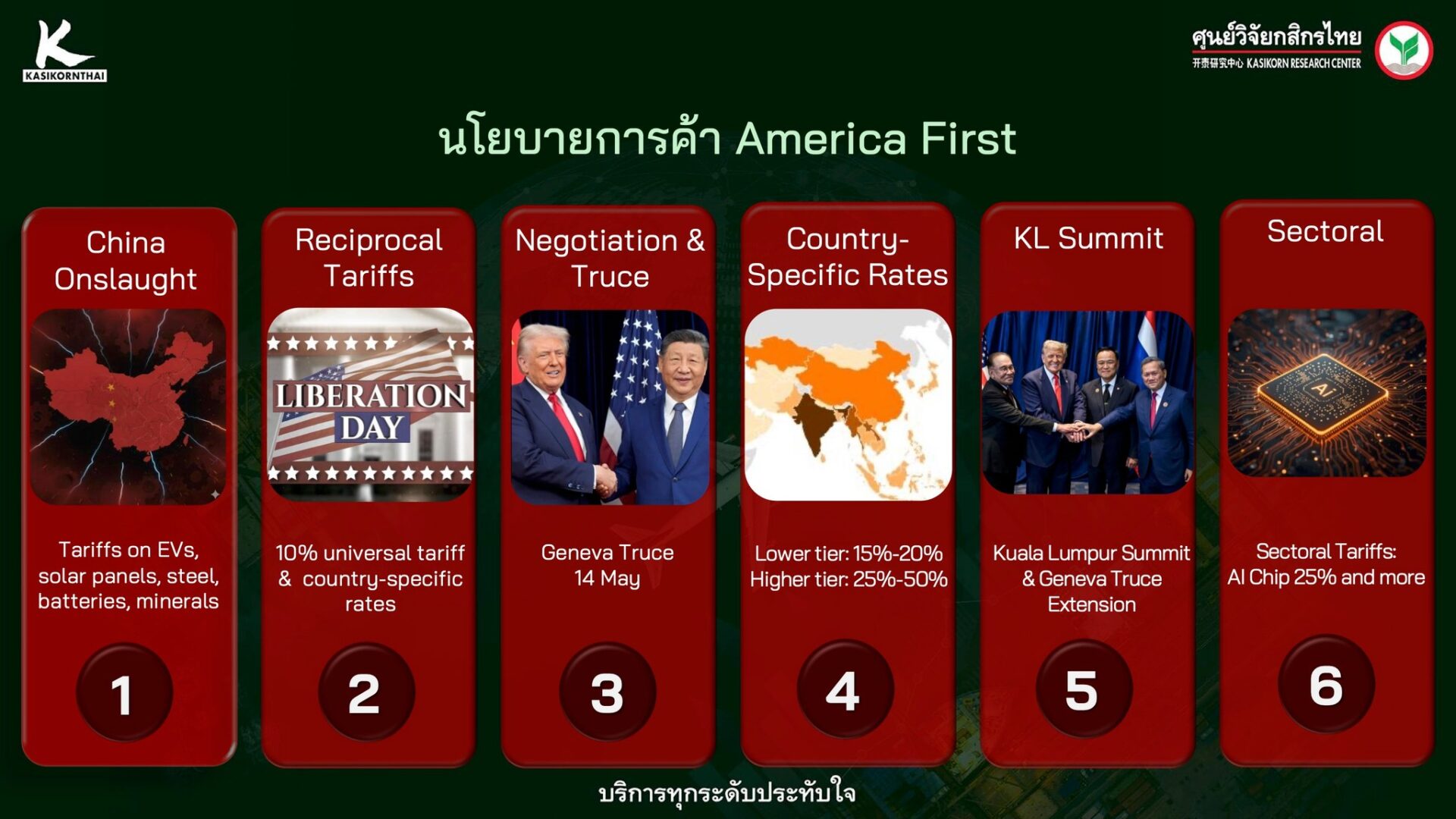
Looking ahead to 2026, several key events are expected to shape the direction of global trade, including a potential meeting between Chinese and U.S. leaders, the review of the United States-Mexico-Canada Agreement (USMCA), and a court ruling on whether the use of the International Emergency Economic Powers Act (IEEPA) to impose tariffs will be deemed invalid. The U.S. has used import tariffs to protect domestic industries. For Thailand, accelerating free trade agreements (FTAs) with the European Union (EU) and the United States is crucial to avoid competitive disadvantages—particularly in the gems and jewelry sector, which competes directly with India.

Mr. Burin Adulwattana, Managing Director and Chief Economist of KASIKORN Research Center Co., Ltd., stated that President Donald Trump’s announcement of the “America First Trade Policy” marked a significant shift in U.S. trade policy. The move has not only reshaped global trade structures but also compelled many countries to significantly adjust their geopolitical strategies and supply chains.
Over the past year, President Trump has cited national security and political reasons to enforce both reciprocal tariffs and product-specific tariffs under Section 232. In addition, U.S. geopolitical policy has reflected elements of the Monroe Doctrine, which views North and South America as within the U.S. sphere of influence. This is evident in the imposition of reciprocal tariffs of around 10% on most Latin American countries, while Brazil has faced tariffs as high as 50% for political reasons.
However, the America First Trade Policy has not had as severe an impact on global trade, the global economy, or the U.S. economy as initially anticipated. One reason is that the measures were implemented with delays (beginning in August 2025), and most countries refrained from retaliating with higher tariffs against the United States.
Impact on China and Global Trade
Although Chinese exports to the U.S. declined by approximately 20% over the past year, China’s overall exports continued to expand, reaching a record trade surplus of USD 1.2 trillion. China has redirected exports to other regions, including ASEAN, the EU, and Africa. However, part of this trend reflects transshipment practices aimed at circumventing tariffs.
China has responded to U.S. tariff measures, leveraging its strategic advantage in rare earth elements and critical minerals resources in which China holds significant global supply chain dominance and which are vital to U.S. strategic and economic security.
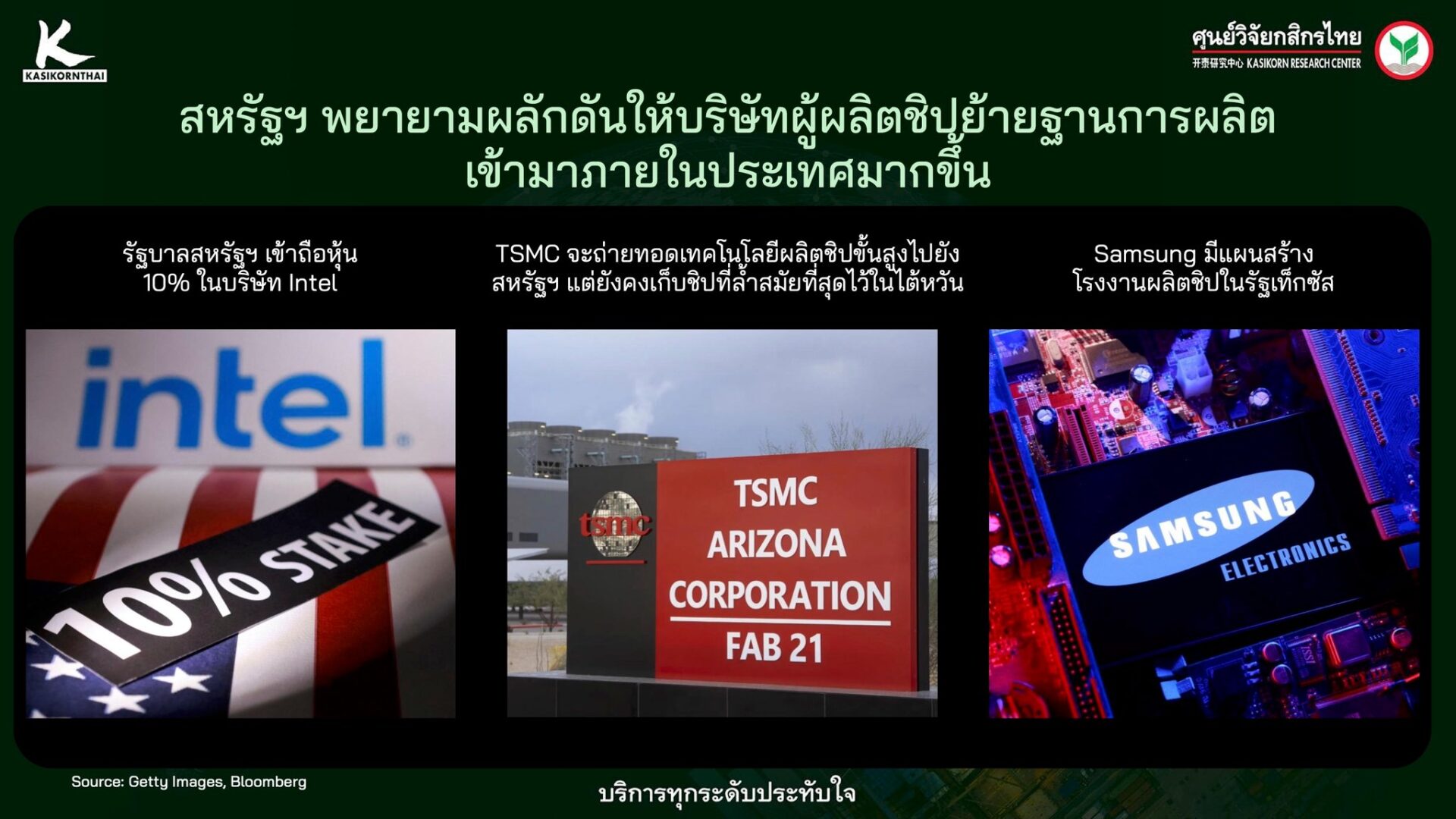
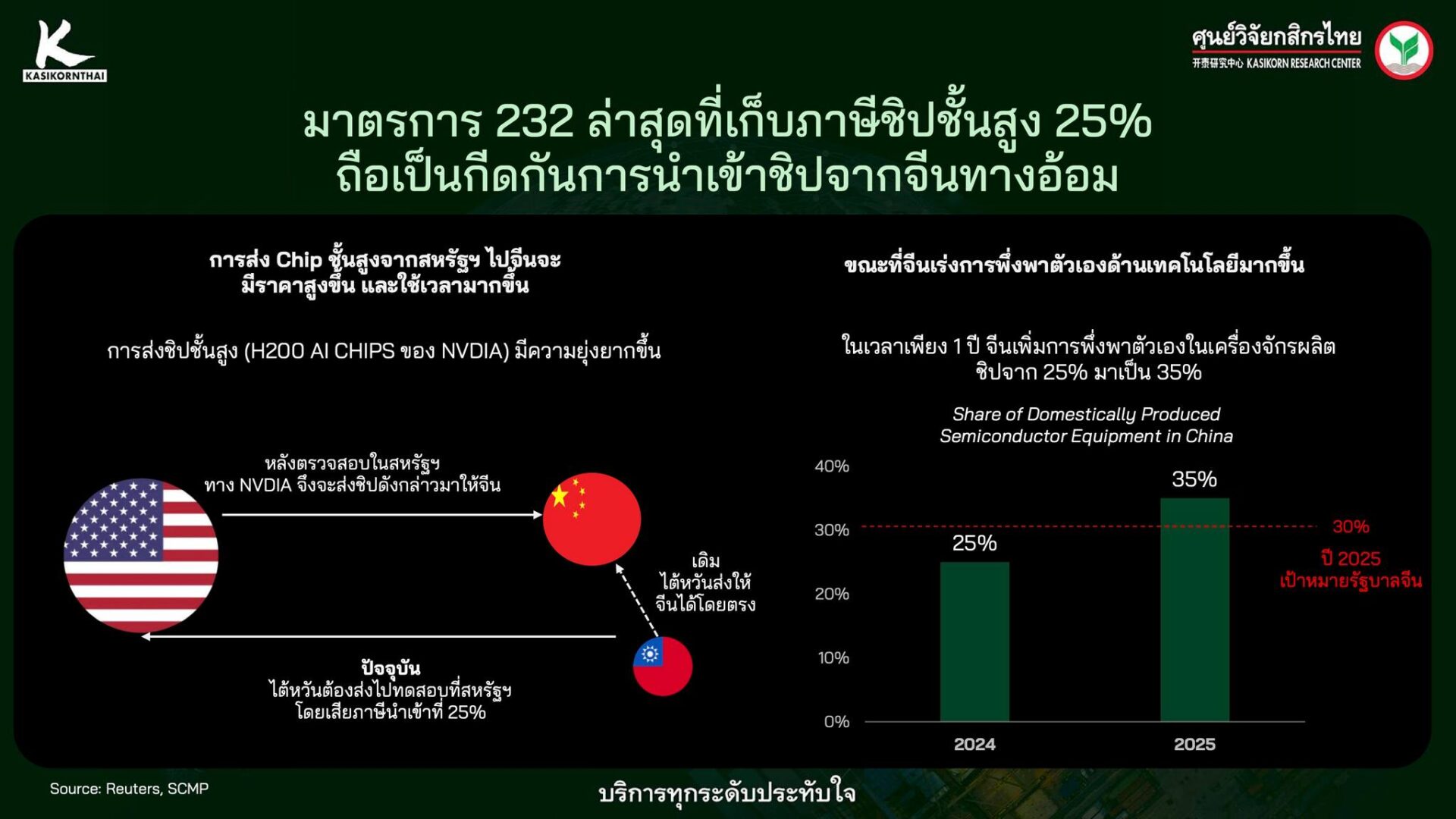
Beyond reciprocal tariffs, the U.S. has also imposed product-specific tariffs under Section 232 on steel, aluminum, automobiles and auto parts, and semiconductors. In the future, tariffs on pharmaceuticals and medical supplies may also be introduced to encourage reshoring and boost domestic manufacturing employment. As a result, leading companies in industries such as semiconductors, automotive, and steel have announced increased investment in the United States.
Nevertheless, overall manufacturing employment in the U.S. has continued to contract, with only certain sectorsparticularly metal processing (notably steel) showing job growth.
Key Trade Developments to Watch in 2026
Several major events in 2026 are expected to shape the future direction of global trade:
A meeting between President Xi Jinping and President Trump in April
A court ruling on whether the use of IEEPA to impose tariffs will be invalidated
The USMCA review in July
The U.S. midterm elections
The expiration of the temporary suspension of tariff retaliation between China and the U.S. in November
“America Builds Walls While Others Build Bridges”
While the United States is erecting trade barriers to protect domestic industries, other countries are accelerating trade agreements among themselves. For example, India successfully concluded negotiations for an FTA with the EU after nearly 20 years of discussions and also reached a trade agreement with the U.S., enabling India to benefit significantly from the America First Trade Policy.
Implications for Thailand
For Thailand, close attention must be paid to industries that compete directly with India in the U.S. and EU markets—particularly the gems and jewelry sector. Thai exports are at a disadvantage compared to India because Thailand does not yet have a free trade agreement with the EU.
Looking ahead, the Thai government must urgently accelerate efforts to secure FTAs with both the EU and the United States to safeguard the country’s long-term trade competitiveness.