


As MICE evolves beyond meetings and exhibitions, global events are becoming a new battleground for economic competitiveness.
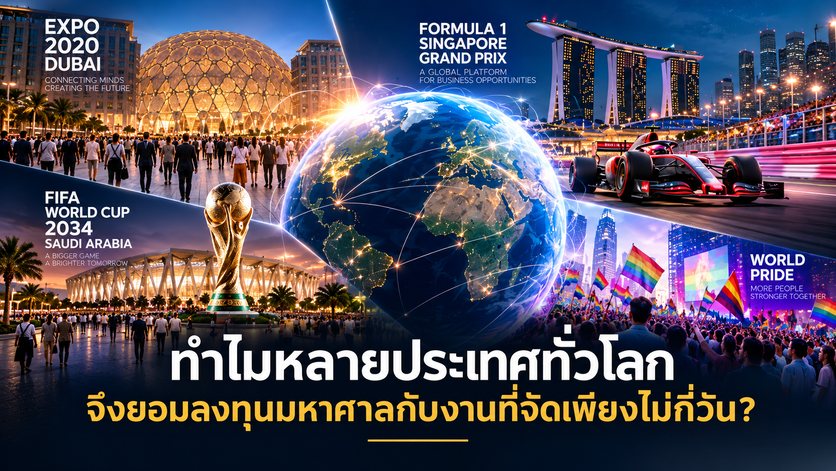
When a country commits substantial public funding to attract a major international event that lasts only a few days, the first question many people ask is: “Is it worth it?”
It is a fair question. But when an event brings investors, buyers, industry experts, technology and global attention together in one place, perhaps the more important question is whether the budget should be viewed as an expense or an investment.
Measuring Investment by Its Economic Returns
If MICE is viewed simply as a series of meetings, conferences and exhibitions, the cost of hosting major events may seem considerable. But when the entire economic value chain is taken into account, the picture changes, revealing a much broader impact on the economy.
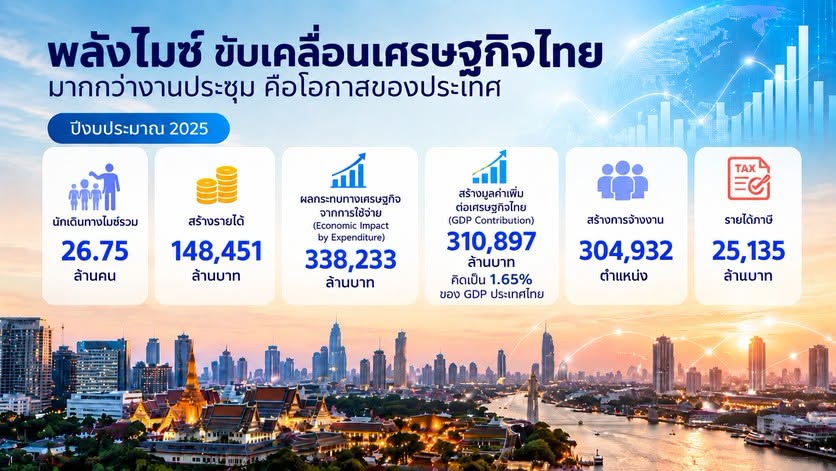
In Thailand’s fiscal year 2025, the MICE industry attracted a total of 26.75 million travellers, generating THB 148.451 billion in revenue. Expenditure-related economic impact exceeded THB 338.233 billion, while the industry contributed THB 310.897 billion in value added to the Thai economy, equivalent to 1.65% of national GDP. It also supported 304,932 jobs and generated THB 25.135 billion in tax revenue.
These figures demonstrate that the success of an event should not be measured solely by its stage design, opening ceremony or attendance figures. Its true value lies in the revenue generated, jobs created, business networks established, investment attracted and opportunities that continue to emerge long after the event has ended.
How Countries Are Turning Global Events into Economic Engines
Countries today are competing on more than labour costs or tourist arrivals. Increasingly, they are competing to attract the people who bring opportunities, investment and business connections.
Singapore: The city-state leverages Formula 1 to attract more than 550,000 high-value visitors, generating an estimated SGD 2 billion in economic activity.
Dubai: Expo 2020 Dubai generated an estimated AED 154 billion in value added to the UAE economy and supported more than 1.03 million jobs.
Saudi Arabia: The Kingdom is advancing its Vision 2030 ambitions through its successful bids to host World Expo 2030 and the FIFA World Cup 2034.
The common thread is clear: governments are using major international events to strengthen their global image, attract capital, open new markets and create a lasting legacy beyond the event itself.
Where Does Thailand Stand in This Global Race?
Thailand has strong foundations on which to build, including its strategic location, service capabilities, food, wellness offerings and distinctive cultural identity. Yet in an era when success is no longer measured by attendance alone, the country faces a bigger challenge: translating these strengths into tangible business outcomes and long-term economic value, while shifting its international image from a desirable tourist destination to a compelling place to do business.
This is where the MICE industry can play a pivotal role in positioning Thailand as a high-value-added destination, built around three key priorities:
Readiness and reliability: Providing infrastructure and operational capabilities that meet international standards and can be delivered in practice.
Meaningful experiences: Paying attention to every detail to create experiences that exceed expectations.
Lasting impact: Building collaborative networks that deliver long-term benefits for business, society and the environment.
Together, these priorities can help Thailand develop an event industry that responds more effectively to the demands of the modern global economy.
One Event Can Generate Economic Value Far Beyond Its Duration

The economic impact of a major event begins well before its opening day and can continue long after its doors close.
Before the event, value is generated through event acquisition and bidding, venue preparation, recruitment, transportation planning and the engagement of suppliers and service providers.
During the event, spending flows directly into the economy through hotels, restaurants, exhibition services, marketing, equipment and a wide range of supporting businesses.
After the event, longer-term returns can emerge through buyer databases, business relationships, improved urban standards and new investment opportunities.
The impact can also extend through digital conversations and online engagement. At Money20/20 Asia 2026, for example, ongoing online discussion and positive audience responses generated a reported net sentiment score of 96.8%. Engagement increased noticeably during the event as session summaries and key takeaways were shared, demonstrating how an event’s value can reach audiences far beyond its physical venue and continue to build momentum after the closing day.
This highlights an increasingly important dimension of the MICE industry: the ability to extend the reach and influence of an event through content, knowledge-sharing and sustained digital engagement.
Behind the Strategy to Bring Global Opportunities to Thailand: The National Bidder
One organisation playing a key role in this process is the Thailand Convention and Exhibition Bureau (TCEB), a public organisation that serves as Thailand’s national bidder for major international events.
Its role is to represent Thailand on the global stage, compete for the right to host significant international gatherings and showcase the country’s capabilities to the world. Beyond securing hosting rights, the broader objective is to turn these events into tangible business opportunities, transform attendance into meaningful connections and strengthen Thailand’s ability to generate measurable economic impact.
Winning the right to host an event is only the starting point. The greater ambition is to ensure that the event delivers value for the country’s economy and business community.
Winning the Bid Is Only the Beginning
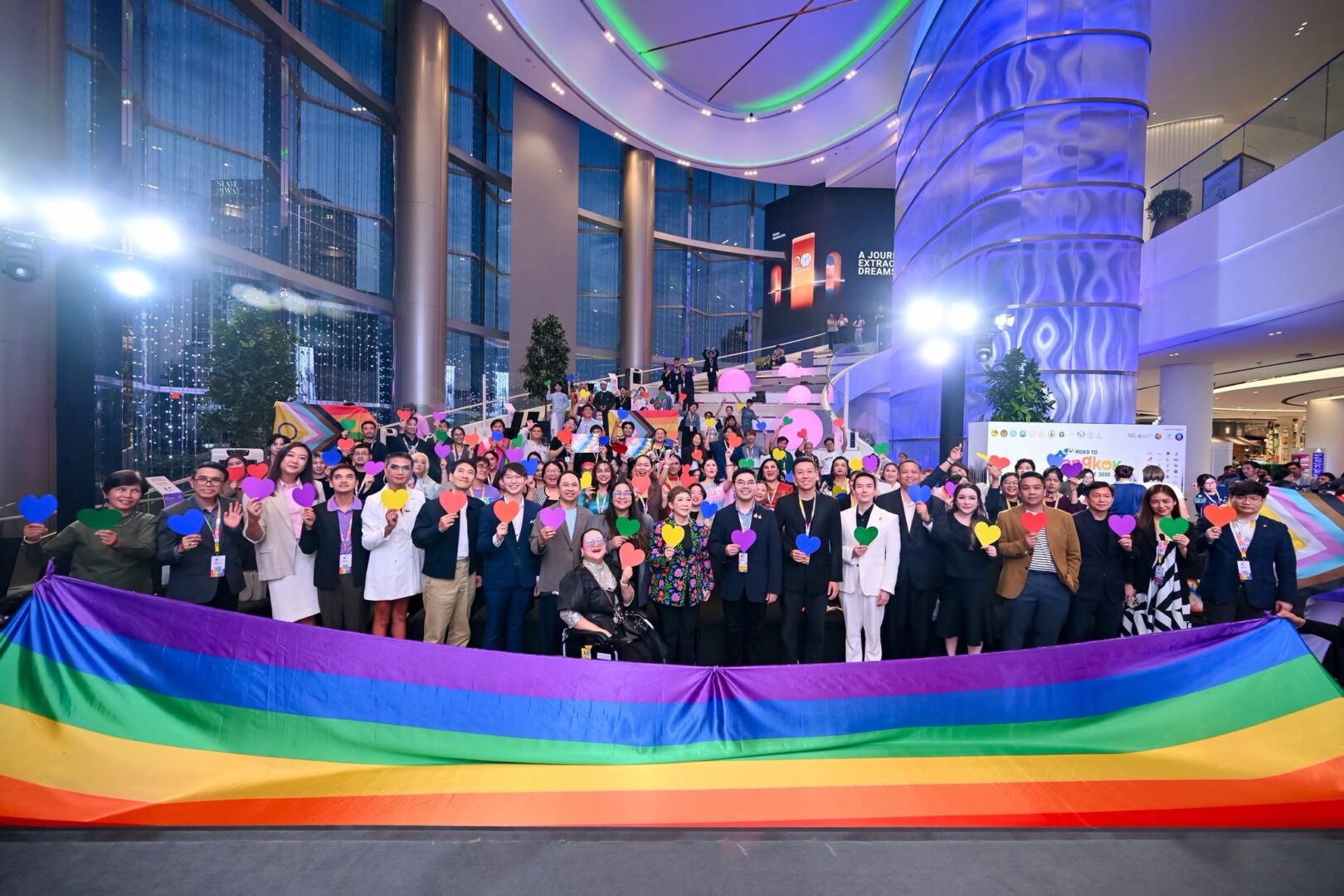
Securing the right to host a major international event may make headlines, but a more important question follows: What can the country turn that event into?
Can it generate revenue for domestic businesses? Can local enterprises become part of international supply chains? How will the event help improve the host city? Will it lead to new investment or stronger business partnerships? Can it strengthen international confidence in Thailand, or even lay the foundations for emerging industries?
A truly valuable global event creates far more than a high attendance figure. It builds networks, shares knowledge, raises standards, strengthens confidence and enhances a country’s competitive position.
In the 21st century, competition between countries is no longer defined solely by labour costs or visitor numbers. It increasingly depends on which destinations can attract more people, capital and business networks—and convert those connections into lasting economic opportunities.
MICE is therefore much more than a conference, an opening ceremony or an event that lasts a few days. It has become one of the arenas in which countries compete for economic growth and global relevance.
Ultimately, countries are not simply investing in the event itself. They are investing in the economic opportunities that the event can bring home.